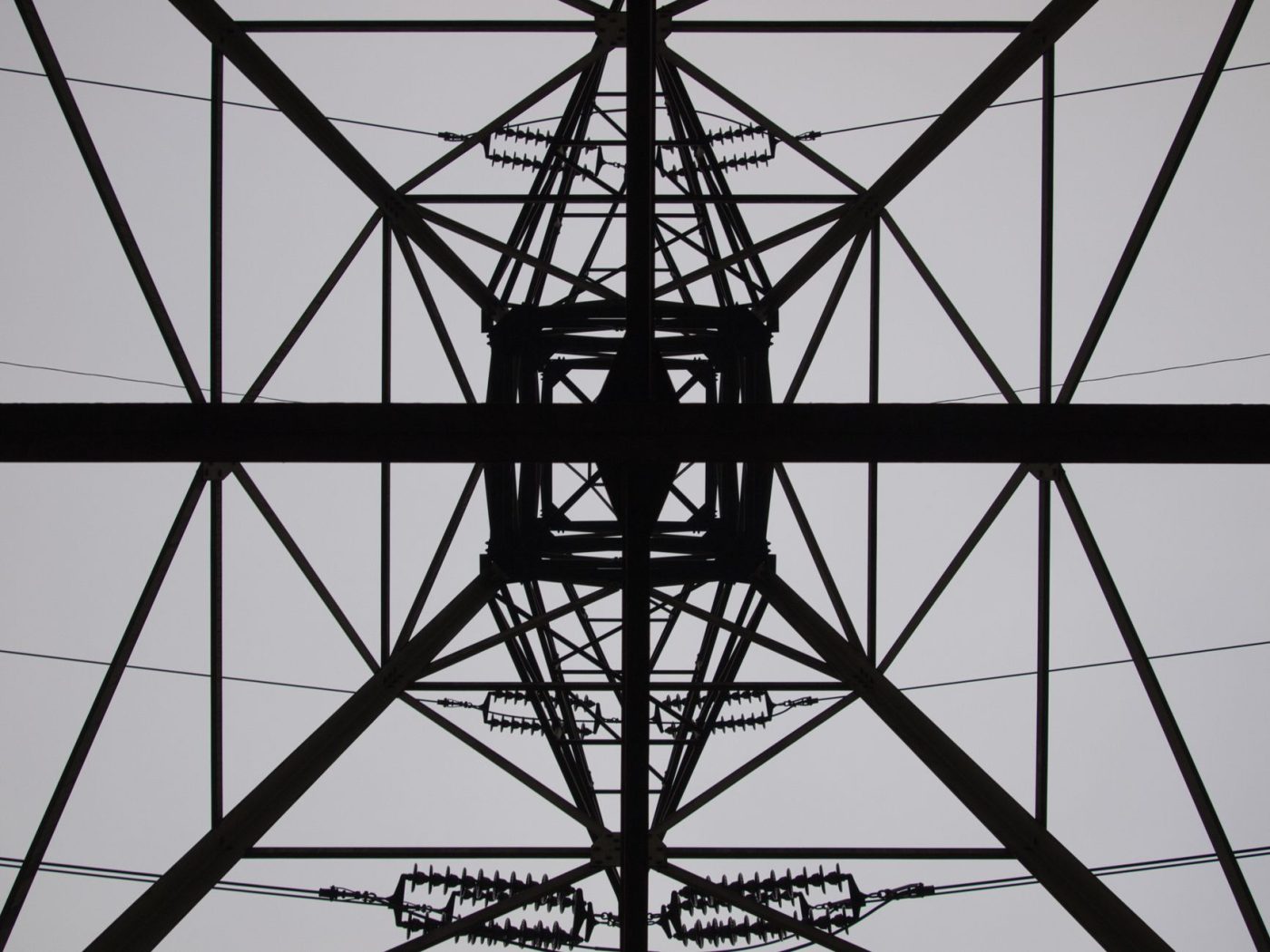
Australia’s electricity costs are often presented as set by a natural, non-ideological “free market” — where prices respond to supply and demand. The reality however is that this is a completely manufactured illusion. The entire national energy system was designed by the big business lobby, not to lower your power bills or spur innovation and competition, but to systematically extract wealth from households and channel it directly to massive, mainly foreign-owned corporations.
Unlike standard retail goods, electricity has no natural market. It is a physical, natural monopoly that requires constant state coordination to exist. Generating electricity on a population scale requires the building of massive, physical power generation plants, huge amounts of steel for transmission lines, highly complex sub-stations.
Like other natural monopolies such as water and sewerage or trains, it would be highly irrational to have multiple competing infrastructure operating side by side that consumers could choose from — imagine a dozen different power lines connected to your house, running to a dozen massive competing substations and a dozen competing transmission lines running to a dozen competing power stations.
To create a fake veneer of competition, neoliberal business executives, economists and governments such as the Kennet Government in Victoria and Olsen Government in South Australia constructed a massive, highly interventionist network of artificial institutions and regulations to mimic a competitive market.
This fake market was combined with sweeping and unpopular privatisation of electricity assets. None of this privatisation came from widespread public demand — nobody wanted this. Rather, privatisation was heavily lobbied for in the 1980s and 1990s by powerful business coalitions like the Business Council of Australia and corporate-funded think tanks like the Institute for Public Affairs. (Despite its name, the absolute majority of the largest members of the Business Council of Australia are majority foreign-owned corporations.) These groups flooded the political arena with hundreds of reports and conferences annually to force deregulation onto the political and public-service agenda.
The corporate blueprint for this transformation was called Project Victoria, commissioned in 1990 by business lobbies and authored by right-wing think tanks like the Institute of Public Affairs. Project Victoria successfully set the agenda for the Kennett Government to privatise essential infrastructure and slash the public service workforce. Victoria became the model.
For state governments, selling off public assets was an attractive short-term cash grab to reduce public debt. In Victoria and South Australia, state debt fell from $76 billion in 1993 to $47 billion in 1997. However, like all privatisations of public assets, selling permanent assets for one-off reduction in debt came at a generational cost, leaving everyday people and firms far worse off in the long run.
Kennett privatised the State Electricity Commission, and most states followed through the 1990s, and it was during this period that the highly complex “National Energy Market” was created. Like most monopolistic, fake “markets”, the entire regulatory system was, from the outset, ideological intended to facilitate massive private profits at the expense of the public.
The promise of cheaper power under the privatised, deregulated market vanished within just a few years. Price controls were quickly removed. Electricity costs skyrocketed. By the early 2000s the energy corporations were price-gouging profits of 30-40 percent.
A particularly blatant example happened in NSW when the newly privatised and corporatised energy network companies (Ausgrid, Endeavour Energy and Essential Energy) won a legal battle to allow them to overturn infrastructure spending caps. Worse still, these companies have managed to change the “revenue-cap” framework to include non-physical assets into what they’re allowed to pass on to consumers. This allowed these companies to pass on $3 billion in excess expenditure onto NSW consumers — an extra $100 per person per year.
Similar profiteering occurred in Queensland after retail pricing was deregulated in South East Queensland. Not only did household electricity bills increase by more than $100, but over 20,000 homes were disconnected from an essential service due to bill payment hardship.
Meanwhile the electricity sector systematically under-invested in maintaining critical transmission (the giant power lines) and distribution (the local “poles and wires” in suburban streets). Euphemistically called “thin maintenance”, this allowed private operators to significantly profit from underinvestment.
Behind the neoliberal economic spin of “efficiency” and “competition”, the real political objectives of privatisation were twofold.
First, it sought to crush the power of highly unionised public-sector workforces.
Second, it aimed to “socialise” the costs of business profitability by shifting the financial overhead of electricity supply directly onto the householder.
By deunionising the energy workforce and pushing energy costs onto households, the neoliberal ideology insulates corporations from democratic political pressure.
Today, the National Electricity Market operates as a complex wholesale game where generators bid to supply power in five-minute blocks, overlaid with a duplicative and wasteful retail system.
Because the wholesale system sets the final price based on the highest bid accepted to meet demand, the entire pricing framework is structurally vulnerable to corporate exploitation and price manipulation.
A single peaking plant can drive up wholesale electricity prices for every participant in that 5-minute window — this is why legacy energy companies hate renewables, and it is also why renewable energy struggles to produce enough profit to challenge the fossil fuel sector.
For example, on extreme weather days, generators have been documented withholding supply until demand peaks, allowing them to “rebid” their capacity at astronomical prices under the clinical label of financial optimisation.
Similarly, the design of the market actively discourages investing in more capacity — there’s a reason that the private sector electricity generators have run-down the large coal-fire power stations and refused to invest in new renewable generation. Because undersupply keeps wholesale prices high. Building new generation, or investing in reserve or standby generation reduces profits. The “market” system financially rewards instability and fragility over system reliability.
Complexity is also a feature to prevent any kind of democratic accountability. The high level of technical coordination, bidding protocols, hedging, spot prices, legal monitoring, all conceal the exploitation, making the profiteering seem rational and just the natural market working as markets do. Until 2017 for example, the electricity companies used to sue the energy regulator in the Federal Court to overturn pricing decisions. This allowed the electricity companies to systematically stop or even roll-back pricing cuts.
The electricity retail overlay is just as wasteful and prone to price-gouging and corporate profiteering. Privatisation and separation of electricity production from its distribution and sale — nonsensical when you remember it is a monopoly — has created massive deadweight of marketing, advertising, sales and corporate administration for scores of electricity retailers — adding an estimated annual $100-200 additional cost per household. The “competition” designed to lower prices has done the exact opposite.
This electricity retail market is not a natural phenomena — it was purposely created by neoliberal, ideologically motivated big business lobby groups.
The human cost of this neoliberal experiment has been severe.
Between the mid-1990s and 2003, secure employment in the electricity sector was gutted — more than 50,000 electricity workers were sacked. While this slashed costs for the energy companies and their finance-sector backers, it devastated communities and replaced secure jobs with underpaid contract work.
The deregulation and privatisation has created three massive energy companies that dominates electricity retail and generation: AGL, Origin and EnergyAustralia. In 2009 these three held just 15 percent of the market and in 2026 it is more than 70 percent.
These corporations can levy defacto taxes on homes and businesses due to their enormous size and vertical integration. They are so big they dominate regulators and use their power to prevent genuine competitors from threatening them — for example, independent retailers must buy their hedging contracts from the big three.
Similarly, everyday households have experienced decades of crushing price rises. As Alison Pennington from McKell has shown, the privatisation of energy — as well as health care, toll roads, childcare, aged care, education and so on — has resulted in severe cost-of-living increases. Power bills and electricity costs were, for example, the top pressures facing readers of this blog.
The Australian energy “market” proves that privatisation was never about economic efficiency or lowering prices through competition, but was instead always ideologically motivated enclosure of public assets designed to turn an essential service into a guaranteed corporate profit-centre.
Unfortunately, the structural power of these giant energy companies explains why state and federal governments continue to preserve the NEM despite public dissatisfaction and the abject failure of the system. Regulators and bureaucrats are structurally dependent on private energy corporations to keep producing electricity. Because the state has been hollowed out and governments have lost their capability to do things, they must rely on private investment for grid reliability. What a government is willing to do to reform energy and reduce electricity costs is constrained by their overriding objective to guarantee corporate profits.
The question remains: If electricity is a natural monopoly necessary for human survival, why do we continue to tolerate a system that treats endless increases to the cost-of-living as a corporate profit opportunity?